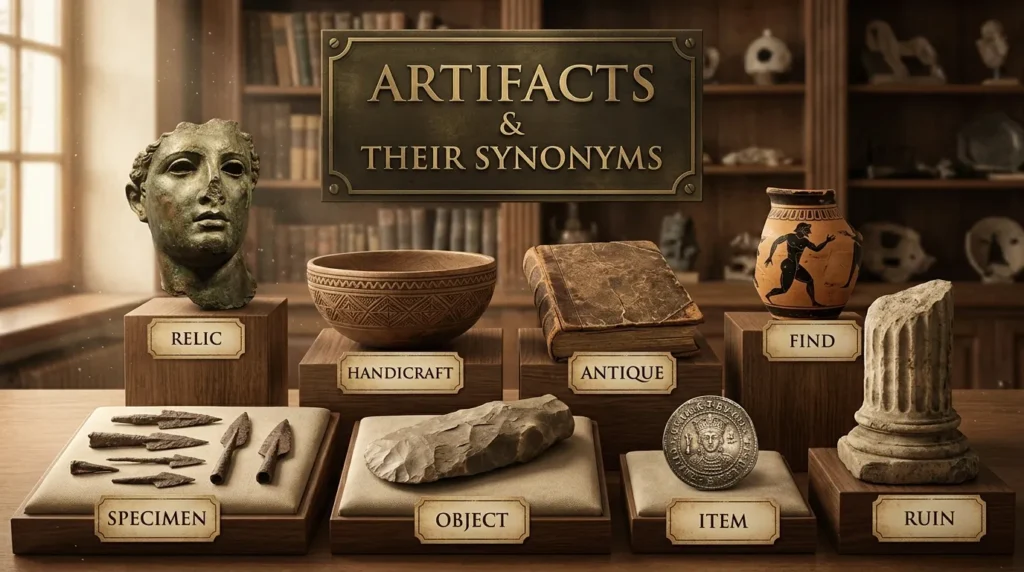
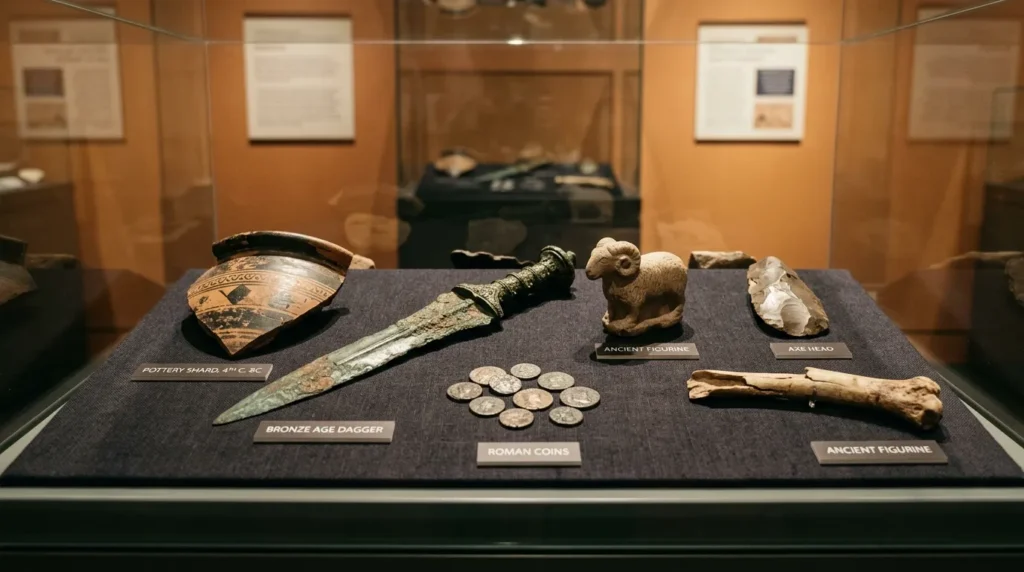
Have you ever visited a museum and seen an old object from the past? Maybe it was an ancient coin, a broken pot, or an old tool. These special objects are often called artifacts.
For example, a student writing about history may say, “The artifact was found near an old temple.” But using the same word again and again can sound boring. That is why learning synonyms of artifact is very useful.
An artifact is an object made or used by people, often from history or culture. It can also mean something artificial or created by humans.
. It also helps daily English users sound more natural in conversations and emails.
In this guide, you will learn 50 simple and useful words related to artifacts. Each word includes an easy meaning and two short examples to help you understand quickly.
Relic
Meaning: A relic is an old object from the past.
Examples:
- The museum showed a relic from Egypt.
- Grandpa keeps a war relic at home.
Object
Meaning: An object is a thing you can see or touch.
Examples:
- The old object was made of gold.
- She picked up a strange object.
Antique
Meaning: An antique is an old valuable item.
Examples:
- My aunt bought an antique chair.
- The shop sells antique clocks.
Treasure
Meaning: Treasure is something very valuable or special.
Examples:
- The divers found hidden treasure.
- This necklace is a family treasure.
Heirloom
Meaning: An heirloom is an old family item passed down.
Examples:
- The ring is a family heirloom.
- She protects the old heirloom carefully.
Fossil
Meaning: A fossil is the remains of ancient life.
Examples:
- The boy found a fossil near the river.
- Scientists studied the dinosaur fossil.
Remnant
Meaning: A remnant is a small remaining piece.
Examples:
- Only a remnant of the wall remains.
- The storm left many remnants behind.
Keepsake
Meaning: A keepsake is an item kept for memories.
Examples:
- She kept the photo as a keepsake.
- This watch is my favorite keepsake.
Curio
Meaning: A curio is a rare and unusual object.
Examples:
- He collects strange curios from markets.
- The shelf was full of curios.
Memorabilia
Meaning: Memorabilia are items connected to memories or events.
Examples:
- The room had sports memorabilia.
- Fans bought movie memorabilia online.
Monument
Meaning: A monument is a structure made to remember something.
Examples:
- The monument honors brave soldiers.
- Tourists visited the old monument.
Exhibit
Meaning: An exhibit is an item shown publicly.
Examples:
- The museum opened a new exhibit.
- Children loved the dinosaur exhibit.
Piece
Meaning: A piece is one item or part of something.
Examples:
- He found a piece of pottery.
- The artist sold a special piece.
Tool
Meaning: A tool is something used to do work.
Examples:
- Farmers used a simple tool.
- The old tool looked rusty.
Creation
Meaning: A creation is something made by someone.
Examples:
- The clay pot was her creation.
- Kids showed their paper creations.
Craft
Meaning: A craft is something made by hand.
Examples:
- She learned a new craft today.
- The fair sold handmade crafts.
Sculpture
Meaning: A sculpture is art shaped from material.
Examples:
- The sculpture stood in the park.
- He made a stone sculpture.
Statue
Meaning: A statue is a model of a person or animal.
Examples:
- The city built a large statue.
- Birds sat on the statue.
Evidence
Meaning: Evidence is proof that shows something happened.
Examples:
- The artifact gave evidence of trade.
- Police searched for more evidence.
Discovery
Meaning: A discovery is something found for the first time.
Examples:
- The cave was an amazing discovery.
- Scientists celebrated the discovery.
Item
Meaning: An item is a single thing or object.
Examples:
- The box had one old item.
- She checked every item carefully.
Collectible
Meaning: A collectible is something people like to collect.
Examples:
- The coin became a rare collectible.
- He buys comic collectibles online.
Ornament
Meaning: An ornament is a decorative object.
Examples:
- The tree had shiny ornaments.
- Grandma polished the glass ornament.
Symbol
Meaning: A symbol represents an idea or group.
Examples:
- The crown became a symbol of power.
- The flag is a national symbol.
Vestige
Meaning: A vestige is a small sign left behind.
Examples:
- Only a vestige of the castle remains.
- The fire left no vestige behind.
Artifacture
Meaning: Artifact means objects made by humans.
Examples:
- The book discussed ancient artifacts.
- The gallery displayed tribal artifacts.
Device
Meaning: A device is a thing made for a purpose.
Examples:
- The old device still worked well.
- Engineers repaired the broken device.
Instrument
Meaning: An instrument is a tool used for work or music.
Examples:
- The doctor cleaned the instrument.
- He played a musical instrument.
Ruin
Meaning: A ruin is the broken remains of something old.
Examples:
- Travelers explored the old ruin.
- Plants covered the ancient ruin.
Legacy
Meaning: A legacy is something left from the past.
Examples:
- The temple is a cultural legacy.
- Her art became a lasting legacy.
Record
Meaning: A record stores information from the past.
Examples:
- The stone tablet was a record.
- Schools keep student records safely.
Token
Meaning: A token is a small object with meaning.
Examples:
- He gave her a friendship token.
- The medal became a proud token.
Souvenir
Meaning: A souvenir is something kept from a trip.
Examples:
- We bought a Paris souvenir.
- Her shelf held travel souvenirs.
Property
Meaning: Property is something owned by someone.
Examples:
- The artifact became museum property.
- They protected public property carefully.
Asset
Meaning: An asset is something useful or valuable.
Examples:
- The painting is a national asset.
- Good books are learning assets.
Possession
Meaning: A possession is something someone owns.
Examples:
- The vase was his prized possession.
- She packed her possessions quickly.
Masterpiece
Meaning: A masterpiece is an excellent work of art.
Examples:
- The sculpture became a masterpiece.
- Visitors admired the famous masterpiece.
Work
Meaning: A work is something created by a person.
Examples:
- The artist finished her work today.
- His work impressed the judges.
Product
Meaning: A product is something made or created.
Examples:
- The factory made a new product.
- This clay bowl is a handmade product.
Handiwork
Meaning: Handiwork is something made by hand.
Examples:
- Her handiwork looked beautiful.
- Villagers sold handmade handicrafts.
Inheritance
Meaning: Inheritance is something received from family.
Examples:
- The sword was his inheritance.
- She shared the inheritance equally.
Archive
Meaning: An archive is a collection of old records or objects.
Examples:
- The library opened its archive.
- Students studied the newspaper archive.
Relique
Meaning: A relic is an old sacred object.
Examples:
- The church protected the relic carefully.
- Pilgrims came to see the relic.
Memento
Meaning: A memento is an object kept to remember something.
Examples:
- The ticket became a happy memento.
- She kept a shell as a memento.
Figure
Meaning: A figure is a shaped model or form.
Examples:
- The toy figure was tiny.
- Artists painted human figures.
Artwork
Meaning: Artwork is a creative visual work.
Examples:
- The gallery displayed modern artwork.
- Children shared colorful artwork.
Relicry
Meaning: Relicry means collections of relics.
Examples:
- The museum focused on relicry.
- Historians studied ancient relics.
Craftwork
Meaning: Craftwork is handmade artistic work.
Examples:
- The market sold local craftwork.
- Her craftwork won a prize.
Material
Meaning: Material is the substance something is made from.
Examples:
- The artifact used stone material.
- Builders carried heavy material.
Goods
Meaning: Goods are items people make or sell.
Examples:
- Traders carried valuable goods.
- The ship transported ancient goods.
Artifact Piece
Meaning: An artifact is a special historical object.
Examples:
- The collector bought an artifact.
- The old artifact piece looked fragile.
CONCLUSION
Learning the best synonyms of artifact can improve your writing in many ways. These words help students write stronger essays, bloggers create better articles, and English learners speak more naturally.
Using different words also makes your communication clearer and more interesting. Instead of repeating the same word again and again, you can choose a synonym that fits the situation better.
Try using these words in emails, school work and daily conversations. Practice a few new synonyms every day. Over time, your vocabulary will grow, and your English will sound more confident and professional.