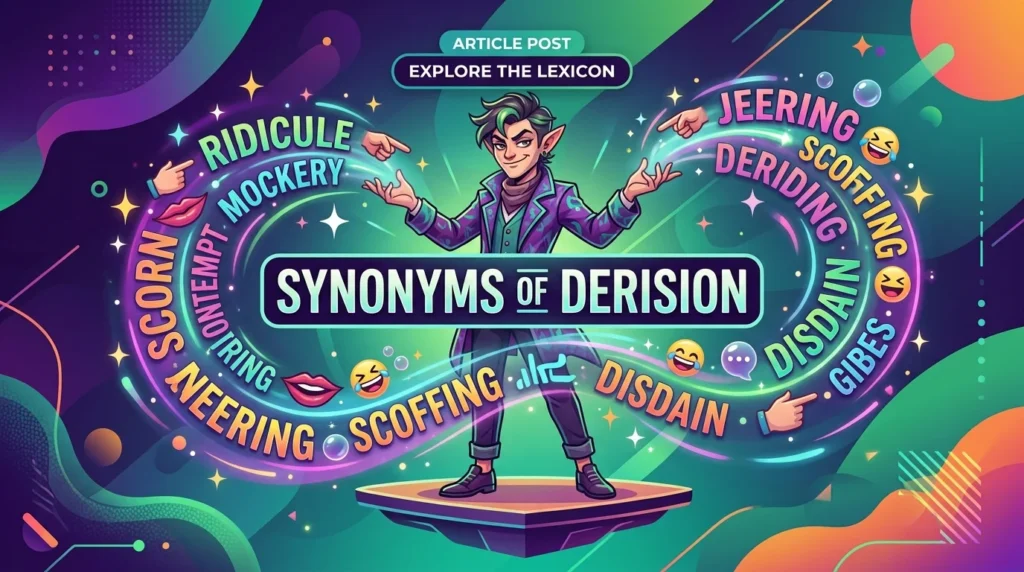
Have you ever heard someone make fun of another person rudely or disrespectfully? Maybe a classmate laughed at someone’s mistake, or a critic mocked an idea they disliked. This type of behavior is often described as derision.
For example, if a student shares an unusual idea and others laugh at it, that reaction may be called derision. It shows disrespect, ridicule, or scorn toward someone or something.
The word derision means ridicule, mockery, or contempt expressed through laughter, comments, or actions. Learning different synonyms of derision can help students, bloggers, content writers, and everyday English users improve their vocabulary and express ideas more precisely.
Below are 50 useful synonyms of derision with simple meanings and examples.
Mockery
Meaning:
Making fun of someone in an unkind way.
Examples:
- His speech faced mockery online.
- The comment was pure mockery.
Ridicule
Meaning:
Words or actions that make someone seem foolish.
Examples:
- She became a target of ridicule.
- The idea received ridicule.
Scorn
Meaning:
A strong feeling of disrespect.
Examples:
- He spoke with scorn.
- Her words showed scorn.
Contempt
Meaning:
A feeling that someone is not worthy of respect.
Examples:
- They treated him with contempt.
- His voice carried contempt.
Sneering
Meaning:
Showing disrespect through facial expressions or words.
Examples:
- The sneering upset her.
- He answered with sneering remarks.
Taunting
Meaning:
Making fun of someone to upset them.
Examples:
- The taunting continued all day.
- Children disliked the taunting.
Jeering
Meaning:
Shouting rude remarks at someone.
Examples:
- The crowd began jeering.
- Jeering filled the stadium.
Scoffing
Meaning:
Mockingly showing disbelief.
Examples:
- His suggestion met with scoffing.
- Scoffing spread through the room.
Sarcasm
Meaning:
Using words that mean the opposite to mock.
Examples:
- Her sarcasm was obvious.
- The remark sounded like sarcasm.
Satire
Meaning:
Using humor to criticize or mock.
Examples:
- The show used satire well.
- Readers enjoyed the satire.
Irony
Meaning:
A contrast is often used for humorous criticism.
Examples:
- The irony amused everyone.
- His statement contained irony.
Disdain
Meaning:
Strong dislike and lack of respect.
Examples:
- She looked at him with disdain.
- The comment showed disdain.
Disrespect
Meaning:
A lack of respect toward someone.
Examples:
- The joke showed disrespect.
- Disrespect hurts relationships.
Belittling
Meaning:
Making someone seem less important.
Examples:
- The belittling upset him.
- She ignored the belittling.
Insult
Meaning:
A rude remark meant to offend.
Examples:
- He took it as an insult.
- The insult caused anger.
Humiliation
Meaning:
A feeling of embarrassment and shame.
Examples:
- The mistake brought humiliation.
- Nobody deserves humiliation.
Degradation
Meaning:
Treatment that lowers someone’s dignity.
Examples:
- The act caused degradation.
- He suffered public degradation.
Abuse
Meaning:
Cruel or insulting treatment.
Examples:
- She faced verbal abuse.
- Abuse should never be accepted.
Scathing Criticism
Meaning:
Very harsh and mocking criticism.
Examples:
- The review contained scathing criticism.
- He received scathing criticism.
Lampooning
Meaning:
Publicly mocking someone humorously.
Examples:
- The article used lampooning.
- Lampooning made readers laugh.
Teasing
Meaning:
Lightly making fun of someone.
Examples:
- The teasing was harmless.
- Friends often enjoy teasing.
Roasting
Meaning:
Humorously mocking someone.
Examples:
- The roasting entertained everyone.
- He handled the roasting well.
Sneer
Meaning:
A mocking expression or remark.
Examples:
- She answered with a sneer.
- The sneer annoyed him.
Gibe
Meaning:
A mocking comment.
Examples:
- He ignored the gibe.
- The gibe upset the speaker.
Jibe
Meaning:
A rude or mocking remark.
Examples:
- The jibe was unnecessary.
- She laughed at the jibe.
Taunt
Meaning:
A remark meant to provoke or hurt.
Examples:
- The taunt angered him.
- She ignored the taunt.
Heckling
Meaning:
Interrupting with rude comments.
Examples:
- The speaker faced heckling.
- Heckling disrupted the event.
Mocking
Meaning:
Imitating someone to make fun of them.
Examples:
- The mocking hurt her feelings.
- He stopped mocking others.
Derogation
Meaning:
The act of lowering someone’s reputation.
Examples:
- The statement was a derogation.
- Derogation damages trust.
Slight
Meaning:
An act showing disrespect.
Examples:
- She felt the slight deeply.
- The slight was intentional.
Put-Down
Meaning:
A remark intended to embarrass someone.
Examples:
- His comment was a put-down.
- She ignored the put-down.
Condescension
Meaning:
Acting as if others are less important.
Examples:
- His tone showed condescension.
- Nobody likes condescension.
Sneerfulness
Meaning:
A mocking attitude.
Examples:
- His sneer was obvious.
- She disliked the sneer.
Disparagement
Meaning:
Speaking negatively about someone.
Examples:
- The article contained disparagement.
- Disparagement can be harmful.
Denigration
Meaning:
Unfair criticism meant to damage reputation.
Examples:
- The speech involved denigration.
- Denigration hurts teamwork.
Reproach
Meaning:
Expressing disappointment or criticism.
Examples:
- She spoke with reproach.
- His reproach was clear.
Criticism
Meaning:
The act of pointing out faults.
Examples:
- The project received criticism.
- Constructive criticism helps growth.
Censure
Meaning:
Strong official criticism.
Examples:
- The committee issued a censure.
- He faced public censure.
Rebuke
Meaning:
A sharp expression of disapproval.
Examples:
- The teacher gave a rebuke.
- She accepted the rebuke.
Rejection
Meaning:
Refusing acceptance or approval.
Examples:
- The proposal faced rejection.
- Rejection can be difficult.
Dismissal
Meaning:
Treating something as unimportant.
Examples:
- His idea met dismissal.
- The dismissal surprised her.
Devaluation
Meaning:
Reducing the worth of something.
Examples:
- The remarks caused devaluation.
- Devaluation affects confidence.
Vilification
Meaning:
Speaking about someone as if they are bad.
Examples:
- The campaign involved vilification.
- Vilification damages reputations.
Slander
Meaning:
False spoken statements that harm reputation.
Examples:
- The claim was slander.
- Slander can lead to legal action.
Defamation
Meaning:
False statements that damage reputation.
Examples:
- The article was accused of defamation.
- Defamation harms trust.
Ridiculing
Meaning:
The act of making fun of someone.
Examples:
- Ridiculing others is unkind.
- He stopped ridiculing classmates.
Scornfulness
Meaning:
A feeling of strong disrespect.
Examples:
- Her scornfulness was evident.
- Scornfulness divided the group.
Mocking Humor
Meaning:
Humor is used to make fun of someone.
Examples:
- The show relied on mocking humor.
- Some people dislike mocking humor.
Sneering Remark
Meaning:
A comment meant to mock.
Examples:
- The sneering remark offended him.
- She ignored the sneering remark.
Derisive Laughter
Meaning:
Laughter is intended to mock someone.
Examples:
- Derisive laughter filled the room.
- The speaker heard derisive laughter.
Contumely
Meaning:
Harsh and insulting treatment.
Examples:
- He endured contumely quietly.
- The character suffered contumely.
Conclusion
Learning synonyms of derision can improve your writing, blogging, speaking, and communication skills. These words help you describe mockery, criticism, and disrespect more accurately. Practice using them in essays, emails, articles, and daily conversations to build a richer and more expressive vocabulary.