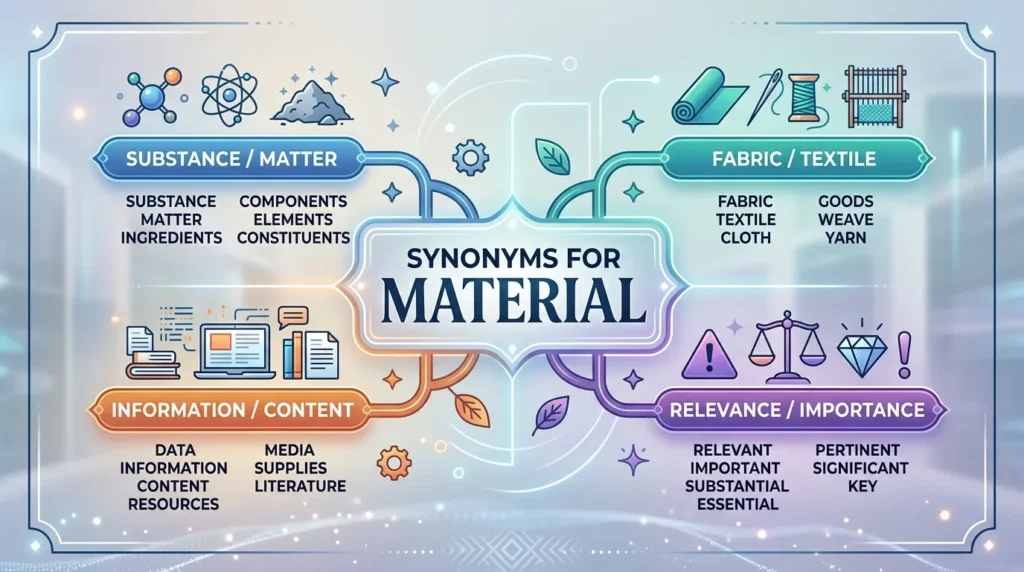
Have you ever bought fabric for clothes, gathered school supplies, or read study material before exams? The word material is used in many daily situations. It can mean fabric, physical substance, information, or things used to make something.
For example, someone may say, “This shirt is made from soft material,” or “The teacher shared study material.” Learning different synonyms for material can help improve your writing and speaking skills.
The word material usually means a substance, resource, fabric, or information used for a purpose. It is common in school writing, blogs, business communication, and everyday English.
Students can use these words in essays and assignments. Bloggers and content writers can make articles more interesting. Daily English users can also sound more natural and confident.
In this guide, you will learn 50 easy synonyms for material with simple meanings and real-life examples. Each explanation is written in very easy English for quick learning.
Substance
Meaning:
A physical thing or matter.
Examples:
- The substance felt very soft.
- Water is a common substance.
Matter
Meaning:
Anything that has physical form.
Examples:
- Scientists study matter carefully.
- The box contained strange matter.
Fabric
Meaning:
Cloth used for making clothes.
Examples:
- This fabric feels smooth.
- She bought blue fabric yesterday.
Cloth
Meaning:
Material made from woven fibers.
Examples:
- The cloth looked expensive.
- Grandma cleaned the table with a cloth.
Textile
Meaning:
Fabric made by weaving or knitting.
Examples:
- Pakistan exports many textiles.
- The shop sells colorful textiles.
Resource
Meaning:
Something useful for a purpose.
Examples:
- Water is a valuable resource.
- Books are learning resources.
Supply
Meaning:
Things available for use.
Examples:
- The school ordered art supplies.
- Food supplies arrived late.
Equipment
Meaning:
Tools or items used for work.
Examples:
- The gym bought new equipment.
- Safety equipment is important.
Stuff
Meaning:
A general word for things or objects.
Examples:
- My bag is full of stuff.
- She packed her stuff quickly.
Goods
Meaning:
Items made for use or sale.
Examples:
- The truck carried goods.
- Stores sell imported goods.
Components
Meaning:
Parts used to make something.
Examples:
- The machine has many components.
- Computers contain small components.
Elements
Meaning:
Basic parts of something.
Examples:
- Trust is one of friendship’s elements.
- The design uses natural elements.
Ingredients
Meaning:
Items are mixed to make food or products.
Examples:
- The recipe needs fresh ingredients.
- Check the ingredients carefully.
Data
Meaning:
Information collected for use.
Examples:
- Scientists studied the data closely.
- The computer stored important data.
Information
Meaning:
Facts or knowledge about something.
Examples:
- The website shared useful information.
- Students need accurate information.
Content
Meaning:
Information inside books or media.
Examples:
- The video content was educational.
- She creates online content daily.
Merchandise
Meaning:
Goods are sold in stores.
Examples:
- The shop displayed new merchandise.
- Fans bought sports merchandise.
Hardware
Meaning:
Physical parts or tools.
Examples:
- The computer hardware was damaged.
- The store sells hardware tools.
Lumber
Meaning:
Wood is prepared for building.
Examples:
- Workers carried heavy lumber.
- The cabin used strong lumber.
Timber
Meaning:
Wood is used for construction.
Examples:
- The bridge was built with timber.
- Timber prices increased recently.
Paper
Meaning:
Thin material used for writing.
Examples:
- She folded the paper carefully.
- The printer needs more paper.
Plastic
Meaning:
A light artificial material.
Examples:
- The bottle is made of plastic.
- Plastic bags harm the environment.
Metal
Meaning:
A hard, shiny material.
Examples:
- The gate is made of metal.
- Metal feels cold in winter.
Steel
Meaning:
Strong metal used for building.
Examples:
- The bridge uses steel beams.
- Steel factories employ many workers.
Iron
Meaning:
A strong, hard metal.
Examples:
- The chair is made of iron.
- Iron gates surrounded the park.
Wood
Meaning:
Material from trees.
Examples:
- The table is solid wood.
- Wood burns easily in a fire.
Concrete
Meaning:
Hard building material.
Examples:
- Workers poured fresh concrete.
- The road uses concrete blocks.
Brick
Meaning:
Hard block used in buildings.
Examples:
- The wall uses red brick.
- Kids painted the brick fence.
Leather
Meaning:
Material made from animal skin.
Examples:
- He wore leather shoes.
- The bag is pure leather.
Fiber
Meaning:
Thin thread-like material.
Examples:
- Cotton fiber feels soft.
- Fiber strengthens the rope.
Yarn
Meaning:
A thread used for knitting.
Examples:
- Grandma bought colorful yarn.
- The sweater used thick yarn.
Silk
Meaning:
Soft, smooth fabric.
Examples:
- She wore a silk dress.
- Silk feels cool and light.
Cotton
Meaning:
Soft, natural fabric.
Examples:
- Cotton shirts feel comfortable.
- Farmers grow cotton widely.
Wool
Meaning:
Warm material from sheep.
Examples:
- The blanket is made of wool.
- Wool keeps people warm.
Canvas
Meaning:
Strong, thick cloth material.
Examples:
- Artists paint on canvas.
- The bag uses canvas fabric.
Rubber
Meaning:
Flexible waterproof material.
Examples:
- The boots are made of rubber.
- Rubber tires last long.
Glass
Meaning:
Hard, clear material.
Examples:
- The window uses thick glass.
- Glass breaks easily sometimes.
Ceramic
Meaning:
Hard-baked clay material.
Examples:
- The bowl is ceramic.
- Ceramic plates look beautiful.
Clay
Meaning:
Soft earth is used for shaping objects.
Examples:
- Kids played with clay today.
- The potter shaped wet clay.
Stone
Meaning:
Hard natural rock material.
Examples:
- The house uses stone walls.
- Stone paths looked beautiful.
Substance-Matter
Meaning:
Physical material or thing.
Examples:
- Scientists tested the substance carefully.
- The box contained an unknown substance.
Articles
Meaning:
Items or objects.
Examples:
- The store sells household articles.
- She packed her personal articles carefully.
Objects
Meaning:
Things you can see or touch.
Examples:
- The room contained old objects.
- Kids collected shiny objects.
Gear
Meaning:
Equipment or tools used for activities.
Examples:
- Campers packed hiking gear.
- Workers checked safety gear.
Apparatus
Meaning:
Equipment used for a task.
Examples:
- Scientists cleaned the apparatus.
- The lab contains medical apparatus.
Supplies
Meaning:
Things were kept for future use.
Examples:
- We need office supplies soon.
- Emergency supplies saved lives.
Essentials
Meaning:
Important necessary items.
Examples:
- Water is one of life’s essentials.
- Travelers packed daily essentials.
Necessities
Meaning:
Things people must have.
Examples:
- Food and water are necessities.
- Families bought necessities.
Tools
Meaning:
Items used to do work.
Examples:
- Mechanics use many tools.
- The toolbox contained useful tools.
Provisions
Meaning:
Supplies are prepared for use.
Examples:
- Travelers carried food provisions.
- Emergency provisions arrived quickly.
Resources
Meaning:
Useful materials or supplies.
Examples:
- Schools need better resources.
- Natural resources must be protected.
CONCLUSION
Learning useful synonyms for material can improve your English vocabulary and communication skills. These words help students write better essays, bloggers create richer content, and English learners sound more natural.
Using different synonyms also makes writing less repetitive and more interesting. You can describe substances, fabrics, information, and supplies more clearly in emails, assignments, blog posts, and conversations.
Practice these words regularly and try using them in daily life. Even learning a few new words every day can greatly improve your confidence and vocabulary.