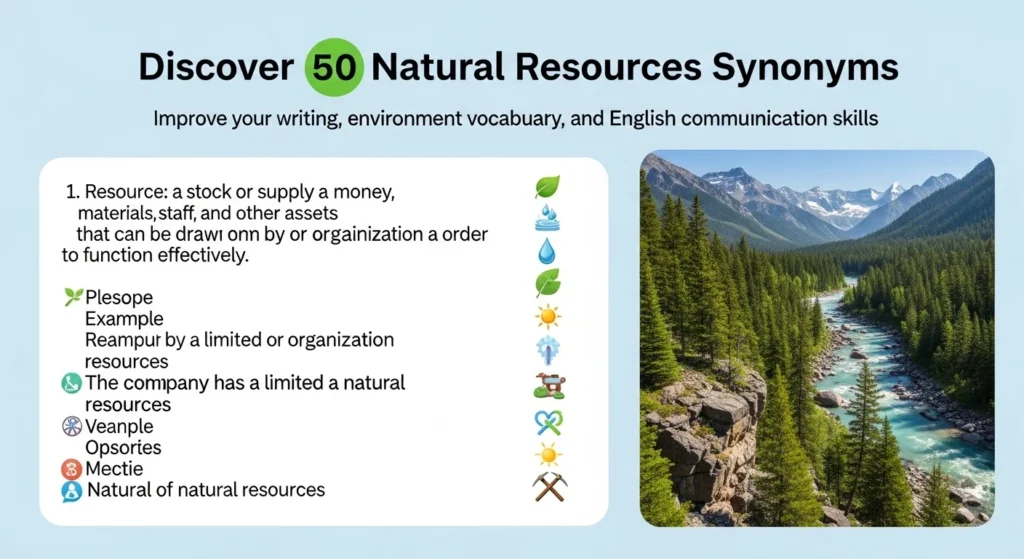
Natural resources are the valuable materials and elements that come directly from nature and are used to support human life, industries, and economic growth. These include water, forests, minerals, soil, sunlight, fossil fuels, and many other resources that exist without human creation. Learning natural resources synonyms can improve your vocabulary and help you choose the most suitable words for academic, professional, or everyday writing.
Depending on the context, different terms may be used to describe natural resources. Whether you’re writing about environmental conservation, geography, sustainability, or economics, using the right synonym makes your content more precise and engaging. It also helps avoid repetition while improving the readability and SEO value of your writing.
Earth Gifts
Meaning: Things given by the earth.
Examples:
- Water is Earth’s gift.
- Trees are Earth’s gifts.
Nature Assets
Meaning: Valuable natural things.
Examples:
- Forests are natural assets.
- Protect nature assets.
Environmental Materials
Meaning: Nature-based usable materials.
Examples:
- Air is an environmental material.
- Soil is an environmental material.
Natural Wealth
Meaning: Valuable natural resources.
Examples:
- Rivers are a natural wealth.
- Forests are a natural wealth.
Earth Resources
Meaning: Resources from Earth.
Examples:
- Minerals are earth resources.
- Use Earth’s resources carefully.
Raw Materials
Meaning: Basic natural materials.
Examples:
- Wood is a raw material.
- Oil is a raw material.
Natural Supplies
Meaning: Nature provides them.
Examples:
- Water is a natural supply.
- Fresh air is a natural supply.
Environmental Resources
Meaning: Nature-related resources.
Examples:
- Forests are environmental resources.
- Protect environmental resources.
Living Resources
Meaning: Resources from living nature.
Examples:
- Plants are living resources.
- Animals are living resources.
Non-living Resources
Meaning: Resources without life.
Examples:
- Rocks are non-living resources.
- Minerals are non-living resources.
Biological Resources
Meaning: Living organism resources.
Examples:
- Forest animals are biological resources.
- Plants are biological resources.
Mineral Wealth
Meaning: Valuable minerals.
Examples:
- Gold is mineral wealth.
- The country has mineral wealth.
Water Resources
Meaning: Water sources.
Examples:
- Rivers are water resources.
- Protect water resources.
Land Resources
Meaning: Resources from land.
Examples:
- Farming uses land resources.
- Land resources are limited.
Forest Resources
Meaning: Resources from forests.
Examples:
- Wood comes from forest resources.
- Forest resources are important.
Energy Resources
Meaning: Natural energy sources.
Examples:
- The sun is an energy resource.
- Wind is an energy resource.
Renewable Resources
Meaning: Resources that return.
Examples:
- Solar energy is a renewable resource.
- Trees are renewable resources.
Non-renewable Resources
Meaning: Resources that finish.
Examples:
- Coal is a non-renewable resource.
- Oil is non-renewable.
Earth Materials
Meaning: Natural earth substances.
Examples:
- Soil is an earth material.
- Rocks are earth materials.
Wildlife Resources
Meaning: Animals and plants.
Examples:
- Protect wildlife resources.
- Wildlife resources are valuable.
Green Resources
Meaning: Plant-based resources.
Examples:
- Forests are green resources.
- Cities need green resources.
Ecological Resources
Meaning: Environmental system resources.
Examples:
- Study ecological resources.
- Protect ecological resources.
Natural Elements
Meaning: Basic nature parts.
Examples:
- Air is a natural element.
- Water is a natural element.
Planetary Resources
Meaning: Earth resources.
Examples:
- Planetary resources are limited.
- Save planetary resources.
Sustainable Resources
Meaning: Resources for long-term use.
Examples:
- Use sustainable resources.
- Solar energy is sustainable.
Basic Nature Supplies
Meaning: Essential natural things.
Examples:
- Water is a basic natural supply.
- Air is a basic natural supply.
Earthly Goods
Meaning: Nature gifts.
Examples:
- Trees are earthly goods.
- Rivers are earthly goods.
Natural Provisions
Meaning: Nature provided things.
Examples:
- Forests are natural provisions.
- Nature gives provisions.
Living Earth Resources
Meaning: Earth life resources.
Examples:
- Protect living Earth resources.
- Plants are living Earth resources.
Environmental Wealth
Meaning: Nature’s value.
Examples:
- Forests are environmental wealth.
- Protect environmental wealth.
Nature Capital
Meaning: Natural economic value.
Examples:
- Water is nature capital.
- Forests are nature capital.
Green Capital
Meaning: Environmental wealth.
Examples:
- Trees are green capital.
- Protect green capital.
Bio Resources
Meaning: Biological natural resources.
Examples:
- Animals are bio resources.
- Study bio resources.
Earth Living System
Meaning: Natural ecosystem.
Examples:
- Earth’s living system is important.
- Protect the Earth’s living system.
Natural Ecosystem Assets
Meaning: Environmental system wealth.
Examples:
- Forests are ecosystem assets.
- Rivers are ecosystem assets.
CONCLUSION
Understanding synonyms for “natural resources” helps broaden your vocabulary when discussing environmental, geographical, or economic topics with greater precision and variety. Phrases like “earth’s assets,” “environmental resources,” “ecological wealth,” “raw materials,” and “nature’s bounty” all refer to the valuable materials and substances found in nature that humans rely on for survival, energy, and economic growth. For instance, “raw materials” suits industrial or manufacturing contexts, while “ecological wealth” works beautifully in environmental discussions, and “nature’s bounty” adds a more poetic and expressive tone to creative writing.
Mastering these vocabulary alternatives allows you to communicate environmental and economic ideas more effectively, producing content that feels fresh, informative, and authentically engaging for readers who care about our planet and its precious, irreplaceable natural treasures.