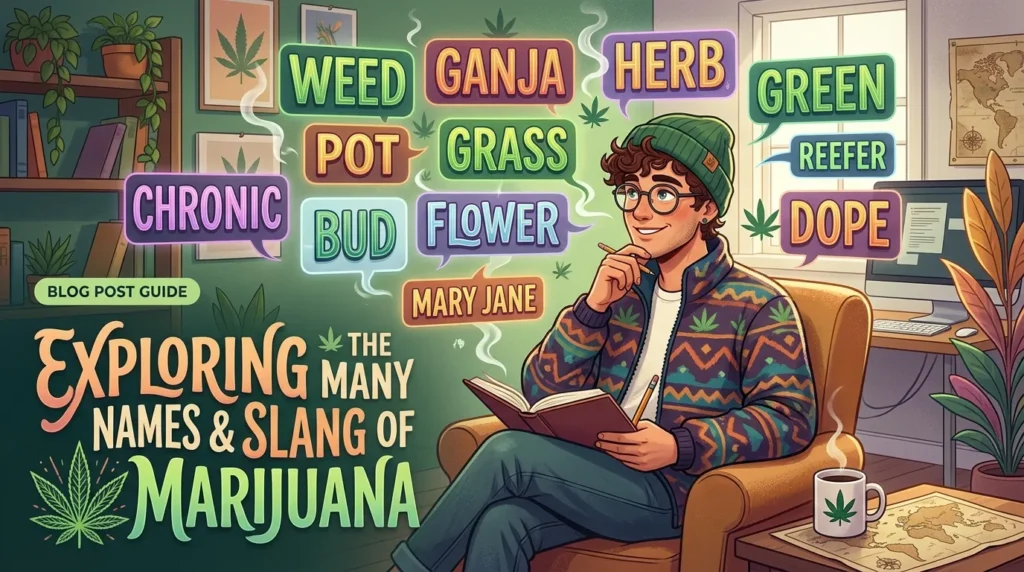
Have you ever heard people use different words for marijuana and wondered what they mean? In movies, songs, news stories, and daily conversations, people often use many slang and formal names for the same thing. For example, one person may say “weed,” while another says “cannabis.” Knowing these words can help you better understand English conversations and popular culture.
The word “marijuana” is a common name for the cannabis plant, which is often used for medical or recreational purposes in some places. Learning synonyms for marijuana is useful for students, bloggers, writers, and everyday English users because these words appear in music, social media, news, and online content. Understanding these terms can improve vocabulary and reading skills.
Cannabis
Meaning:
The formal name of the marijuana plant.
Examples:
- Some countries allow cannabis use.
- He read an article about cannabis laws.
Weed
Meaning:
A very common slang word for marijuana.
Examples:
- They talked about weed in the movie.
- The song mentioned weed several times.
Pot
Meaning:
An informal name for marijuana.
Examples:
- Pot is discussed in many news reports.
- She heard people joking about pot.
Grass
Meaning:
A slang term for marijuana.
Examples:
- Older movies often use the word grass.
- He learned the slang word grass online.
Herb
Meaning:
A casual nickname for marijuana.
Examples:
- Some songs mention the herb often.
- They joked about herb at the concert.
Ganja
Meaning:
A popular slang word for marijuana.
Examples:
- Ganja appears in reggae music.
- He heard the word ganja in a podcast.
Reefer
Meaning:
An old-fashioned slang name for marijuana.
Examples:
- The old film talked about reefer.
- My grandfather recognized the word reefer.
Mary Jane
Meaning:
A playful nickname for marijuana.
Examples:
- The comedian mentioned Mary Jane.
- She saw Mary Jane written online.
Dope
Meaning:
A slang term sometimes used for marijuana.
Examples:
- The movie used the word dope often.
- He heard teenagers say dope in songs.
Hash
Meaning:
A strong form made from cannabis resin.
Examples:
- The article explained what hash is.
- Police found hash during the search.
Hashish
Meaning:
Another formal word for hash.
Examples:
- Hashish has existed for centuries.
- The book discussed hashish history.
Bud
Meaning:
The flower part of the cannabis plant.
Examples:
- The shop displayed cannabis buds.
- He read about bud quality online.
Hemp
Meaning:
A cannabis plant used for products and materials.
Examples:
- Hemp is used to make rope.
- The farmer grows hemp plants.
Joint
Meaning:
A rolled marijuana cigarette.
Examples:
- The actor pretended to hold a joint.
- The movie scene showed a joint.
Blunt
Meaning:
A cigar filled with marijuana.
Examples:
- The rapper mentioned a blunt.
- He heard the word blunt in music.
Spliff
Meaning:
A mix of tobacco and marijuana in a roll.
Examples:
- The documentary explained what a spliff is.
- She heard friends mention spliffs online.
Green
Meaning:
A casual slang word for marijuana.
Examples:
- They called it green in the show.
- Green is common slang in music.
Chronic
Meaning:
A slang term for strong marijuana.
Examples:
- The song talked about chronic.
- He recognized the slang word chronic.
Kush
Meaning:
A famous type of cannabis.
Examples:
- Kush strains are very popular.
- The article described different Kush plants.
Skunk
Meaning:
A strong-smelling type of marijuana.
Examples:
- The report mentioned skunk varieties.
- He learned about skunk from a documentary.
Smoke
Meaning:
A casual word linked with marijuana use.
Examples:
- They joked about smoke in class.
- The song referenced smoke many times.
Flower
Meaning:
The dried part of the cannabis plant.
Examples:
- The store sold cannabis flower products.
- He read about flower strains online.
Herbaceous
Meaning:
Related to herbs or plant material.
Examples:
- The plant had an herbaceous smell.
- She described the scent as herbaceous.
Trees
Meaning:
A slang word for marijuana.
Examples:
- He heard the word trees in rap songs.
- Teenagers used trees as slang online.
Loud
Meaning:
Slang for strong-smelling marijuana.
Examples:
- The rapper talked about loud often.
- Loud is common in street slang.
Dank
Meaning:
Slang for high-quality marijuana.
Examples:
- They described it as dank online.
- The review mentioned dank products.
Sticky Icky
Meaning:
A playful slang term for marijuana.
Examples:
- Sticky icky appears in old songs.
- He laughed at the phrase sticky icky.
Blaze
Meaning:
A slang word connected to smoking marijuana.
Examples:
- The song said “blaze it” repeatedly.
- He heard the phrase in movies.
Roach
Meaning:
The small leftover end of a joint.
Examples:
- The film showed a roach in the ashtray.
- He learned the term roach from friends.
Resin
Meaning:
A sticky substance from cannabis plants.
Examples:
- Resin builds up over time.
- The article explained cannabis resin.
Oil
Meaning:
A liquid cannabis extract.
Examples:
- Some products contain cannabis oil.
- She read about oil extraction methods.
Concentrate
Meaning:
A strong cannabis product.
Examples:
- Concentrates are more powerful than flower.
- The guide discussed cannabis concentrates.
Edibles
Meaning:
Foods made with cannabis.
Examples:
- Edibles are sold in some stores.
- He read safety tips about edibles.
Vape
Meaning:
Cannabis used in a vapor device.
Examples:
- Some people prefer vape products.
- The article discussed cannabis vapes.
Medicinal Cannabis
Meaning:
Cannabis used for medical reasons.
Examples:
- Doctors discussed medicinal cannabis benefits.
- The law allows medicinal cannabis there.
Recreational Cannabis
Meaning:
Cannabis used for enjoyment.
Examples:
- Recreational cannabis is legal in some places.
- The debate focused on recreational cannabis laws.
THC
Meaning:
The main chemical in marijuana.
Examples:
- THC affects the brain and body.
- The label showed THC levels clearly.
CBD Cannabis
Meaning:
Cannabis with high CBD content.
Examples:
- CBD cannabis products are becoming popular.
- She researched CBD cannabis online.
Smokeable Cannabis
Meaning:
Cannabis made for smoking.
Examples:
- The shop sold smokeable cannabis products.
- He learned about smokeable cannabis types.
Hybrid
Meaning:
A mix of cannabis plant types.
Examples:
- The store offered hybrid strains.
- Hybrid cannabis is very common today.
Indica
Meaning:
One main type of cannabis plant.
Examples:
- Indica strains are widely discussed online.
- He read about Indica plants yesterday.
Sativa
Meaning:
Another main type of cannabis plant.
Examples:
- Sativa plants grow very tall.
- The article compared Sativa and Indica.
Strain
Meaning:
A specific type of cannabis plant.
Examples:
- They reviewed a new cannabis strain.
- Some strains have fruity smells.
Medical Weed
Meaning:
A casual term for medical cannabis.
Examples:
- The news discussed medical weed laws.
- Patients asked questions about medical weed.
Herbal Cannabis
Meaning:
Cannabis in natural plant form.
Examples:
- Herbal cannabis has a strong smell.
- The guide explained herbal cannabis products.
Cannabinoid Product
Meaning:
A product made from cannabis chemicals.
Examples:
- The store sold cannabinoid products.
- Scientists studied cannabinoid products carefully.
Plant Medicine
Meaning:
A natural plant used for treatment.
Examples:
- Some people call cannabis plant medicine.
- The article discussed plant medicine traditions.
Green Stuff
Meaning:
A casual nickname for marijuana.
Examples:
- He joked about green stuff online.
- Movies sometimes use the term green stuff.
Leaf
Meaning:
A slang term connected to cannabis.
Examples:
- The magazine used leaf as slang.
- He saw a leaf symbol on the poster.
Smoke Herb
Meaning:
An informal phrase for marijuana.
Examples:
- The song talked about smoke herb.
- He heard the phrase at a concert.
Herb Mix
Meaning:
A mixture containing cannabis herbs.
Examples:
- The package described an herb mix.
- She read warnings about herb mixes.
Conclusion
Learning synonyms for marijuana can help you understand conversations, songs, movies, news stories, and online content more easily. These words also improve vocabulary and make writing more natural and expressive.
Practice using these terms carefully in essays, blogs, emails, and daily English conversations. The more vocabulary you learn, the stronger your communication skills become.