
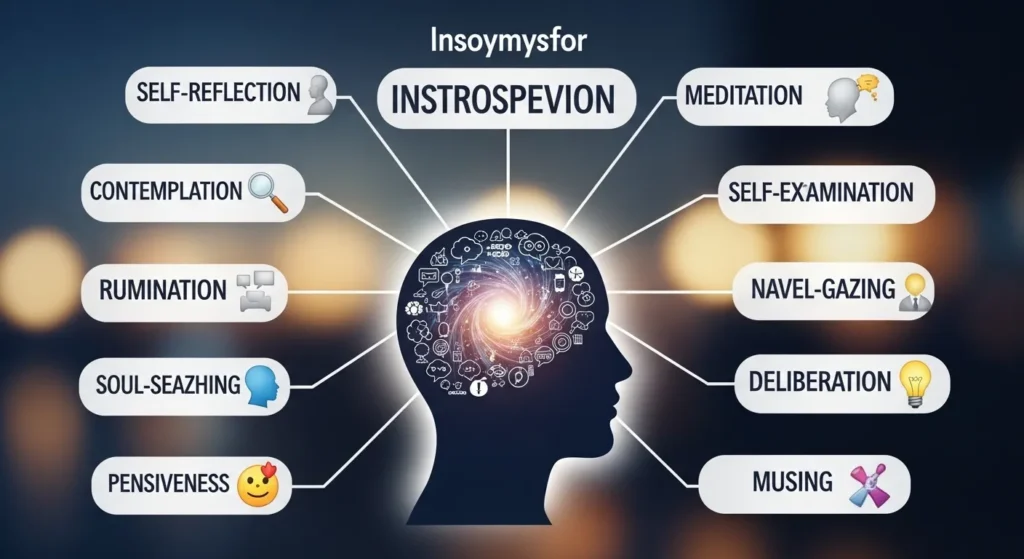
Have you ever sat quietly and thought about your day? Maybe you asked yourself, “Did I do the right thing?” or “Why do I feel this way?” That simple moment is called introspection.
Imagine a student after an exam. They sit alone and think about their answers, their mistakes, and how they can improve next time. This is a real-life example of looking inside your own mind.
The word “introspection” means thinking about your own thoughts and feelings. It is like talking to yourself in your mind. It helps you understand who you are.
Students can write deeper essays. Bloggers can share thoughtful ideas. Content writers can avoid repeating the same word. And everyday English users can express emotions more clearly.
MAIN CONTENT – SYNONYMS LIST
1. Self-reflection
Meaning: Thinking about your own actions.
Examples:
- I did some self-reflection today.
- Self-reflection helps me grow.
2. Reflection
Meaning: Careful thought about something.
Examples:
- I spent time in reflection.
- Reflection helps learning.
3. Self-examination
Meaning: Looking closely at yourself.
Examples:
- He did self-examination.
- Self-examination is useful.
4. Self-analysis
Meaning: Studying your own thoughts.
Examples:
- She likes self-analysis.
- Self-analysis builds insight.
5. Inner thinking
Meaning: Thoughts inside your mind.
Examples:
- I enjoy inner thinking.
- Inner thinking brings peace.
6. Soul-searching
Meaning: Deep thinking about life.
Examples:
- He did soul-searching.
- Soul-searching takes time.
7. Self-observation
Meaning: Watching your own behavior.
Examples:
- Practice self-observation.
- Self-observation helps growth.
8. Self-study
Meaning: Learning about yourself.
Examples:
- She does self-study.
- Self-study is important.
9. Contemplation
Meaning: Deep and calm thinking.
Examples:
- He sat in contemplation.
- Contemplation brings clarity.
10. Meditation
Meaning: Quiet thinking or focus.
Examples:
- I practice meditation.
- Meditation calms the mind.
11. Self-awareness
Meaning: Knowing your own feelings.
Examples:
- Self-awareness is key.
- She has good self-awareness.
12. Awareness
Meaning: Knowing what is happening inside.
Examples:
- Awareness helps growth.
- I gained awareness.
13. Inner reflection
Meaning: Thinking deeply about yourself.
Examples:
- I need inner reflection.
- Inner reflection helps me.
14. Personal reflection
Meaning: Thinking about your own life.
Examples:
- I wrote personal reflection.
- Personal reflection is helpful.
15. Self-thinking
Meaning: Thinking by yourself.
Examples:
- I enjoy self-thinking.
- Self-thinking is good.
16. Deep thinking
Meaning: Serious and focused thought.
Examples:
- He likes deep thinking.
- Deep thinking helps ideas.
17. Thoughtfulness
Meaning: Careful thinking.
Examples:
- She shows thoughtfulness.
- Thoughtfulness is valued.
18. Mindfulness
Meaning: Being aware of thoughts.
Examples:
- Practice mindfulness daily.
- Mindfulness reduces stress.
19. Inner awareness
Meaning: Knowing your inner self.
Examples:
- Inner awareness matters.
- He gained inner awareness.
20. Self-consciousness
Meaning: Being aware of yourself.
Examples:
- She has self-consciousness.
- Self-consciousness can grow.
21. Inner study
Meaning: Studying your thoughts.
Examples:
- I do inner study.
- Inner study helps growth.
22. Quiet thinking
Meaning: Calm and silent thinking.
Examples:
- I enjoy quiet thinking.
- Quiet thinking helps peace.
23. Inner review
Meaning: Checking your own thoughts.
Examples:
- Do an inner review.
- Inner review is useful.
24. Self-review
Meaning: Reviewing your actions.
Examples:
- I did a self-review.
- Self-review improves habits.
25. Personal analysis
Meaning: Studying your own behavior.
Examples:
- Personal analysis helps me.
- I try personal analysis.
26. Inner check
Meaning: Checking your feelings.
Examples:
- Do an inner check.
- Inner check is helpful.
27. Self-check
Meaning: Checking your actions.
Examples:
- I do a self-check.
- Self-check prevents mistakes.
28. Self-insight
Meaning: Understanding yourself deeply.
Examples:
- Self-insight is powerful.
- I gained self-insight.
29. Inner insight
Meaning: Deep understanding inside.
Examples:
- Inner insight helps growth.
- I had inner insight.
30. Personal insight
Meaning: Understanding your own life.
Examples:
- Personal insight is key.
- I gained personal insight.
31. Self-contemplation
Meaning: Thinking deeply about yourself.
Examples:
- Try self-contemplation.
- Self-contemplation helps peace.
32. Inner contemplation
Meaning: Deep inner thinking.
Examples:
- I enjoy inner contemplation.
- Inner contemplation helps focus.
33. Personal contemplation
Meaning: Thinking about personal matters.
Examples:
- Personal contemplation helps.
- I need personal contemplation.
34. Self-evaluation
Meaning: Judging your own actions.
Examples:
- I did self-evaluation.
- Self-evaluation is useful.
35. Inner evaluation
Meaning: Judging your inner thoughts.
Examples:
- Inner evaluation matters.
- I try inner evaluation.
36. Personal evaluation
Meaning: Checking your own progress.
Examples:
- Personal evaluation helps.
- I do personal evaluation.
37. Self-understanding
Meaning: Knowing yourself well.
Examples:
- Self-understanding is important.
- I gained self-understanding.
38. Inner understanding
Meaning: Deep knowledge of yourself.
Examples:
- Inner understanding grows.
- I seek inner understanding.
39. Personal understanding
Meaning: Knowing your own feelings.
Examples:
- Personal understanding matters.
- I have personal understanding.
40. Self-perception
Meaning: How you see yourself.
Examples:
- Self-perception shapes life.
- Improve self-perception.
41. Inner perception
Meaning: Seeing your inner self.
Examples:
- Inner perception helps.
- I trust inner perception.
42. Personal perception
Meaning: Your view of yourself.
Examples:
- Personal perception matters.
- I changed personal perception.
43. Self-focus
Meaning: Focusing on yourself.
Examples:
- Self-focus is needed.
- I practice self-focus.
44. Inner focus
Meaning: Focusing inward.
Examples:
- Inner focus brings peace.
- Try inner focus daily.
45. Personal focus
Meaning: Attention on your own life.
Examples:
- Personal focus helps growth.
- I keep personal focus.
46. Self-awareness thinking
Meaning: Thinking about yourself clearly.
Examples:
- Self-awareness thinking helps.
- I use self-awareness thinking.
47. Inner thinking process
Meaning: How your mind thinks inside.
Examples:
- The inner thinking process matters.
- Study your thinking process.
48. Self-thinking process
Meaning: Your way of thinking.
Examples:
- Improve self-thinking process.
- I study my thinking.
49. Inner dialogue
Meaning: Talking to yourself in your mind.
Examples:
- I have inner dialogue.
- Inner dialogue guides me.
50. Self-dialogue
Meaning: Talking to yourself.
Examples:
- Practice self-dialogue.
- Self-dialogue helps clarity.
51. Inner voice
Meaning: Your thoughts inside.
Examples:
- Listen to your inner voice.
- My inner voice guides me.
52. Self-voice
Meaning: Your own inner thoughts.
Examples:
- Trust your self-voice.
- I hear my self-voice.
53. Personal voice
Meaning: Your inner expression.
Examples:
- Personal voice matters.
- I found my voice.
54. Inner look
Meaning: Looking inside yourself.
Examples:
- Take an inner look.
- Inner look helps growth.
55. Self-look
Meaning: Checking yourself.
Examples:
- Do a self-look.
- Self-look is helpful.
56. Personal look
Meaning: Looking at your own life.
Examples:
- Personal look matters.
- I take a personal look.
57. Inner review thinking
Meaning: Thinking while reviewing yourself.
Examples:
- Inner review thinking helps.
- I use this method.
58. Self-review thinking
Meaning: Reviewing your thoughts.
Examples:
- Self-review thinking is useful.
- I practice it daily.
59. Deep reflection
Meaning: Very serious thinking.
Examples:
- I did deep reflection.
- Deep reflection brings answers.
60. Personal deep thought
Meaning: Strong thinking about yourself.
Examples:
- Personal deep thought helps.
- I use deep thought often.
CONCLUSION
Learning synonyms for introspection can greatly improve your English and your thinking skills. For students, or everyday communication, it helps you express your thoughts and feelings more clearly.
These words are not just vocabulary; they are tools for understanding yourself better.
Try using these words in your daily life. Write them in your journal. Use them in emails or conversations. Start with a few and slowly add more.
Remember, better words lead to better thoughts and better thoughts lead to better life choices. Keep learning and keep growing.